


(Floating Solar Power Plant Illustration. Photo Doc.: Scienealert.com)
An active member of G20, Indonesia is highly concerned with global energy transition into green, renewable energy, one of which is through using Solar Power. The Indonesian Government has even put Solar Panels along the recently completed Bali-Mandara Toll Freeway in 6 months time as a token of commitment to G20’s energy transition agenda, a project designed to prepare for Bali’s 2022 G20 Summit that is now fully operating since its official launch on September 21, 2022. The government is also building a Hybrid Solar Power Plant in Bali’s Nusa Penida, now more than 80% complete, and has begun installing Solar Panels on Bali’s private buildings and households.
The government’s Solar Power Plants projects are located not only in Bali. A solar power plant’s usage was recently officiated for usage in Jakarta’s Gambir Train Station, while still building 16 in East Java’s Island of Madura, completion of which is projected in 2023. But the current biggest Solar Power Plant is located in Likupang District, North Sulawesi’s city of North Minahasa, effectively operating since September 2019.
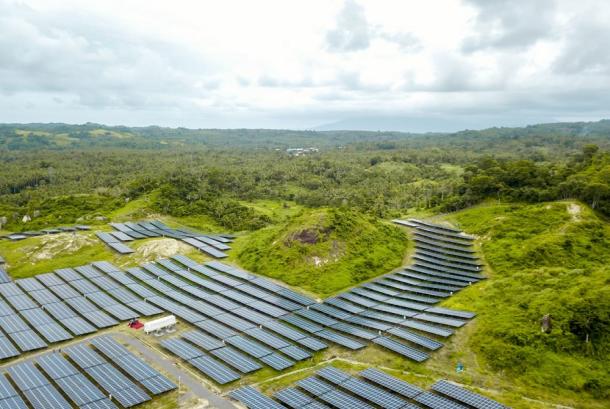
(Likupang District Solar Power Plant in North Minahasa, North Sulawesi. Photo Doc.: Republika)
In Batam, Renewable energy’s demand is not just about aligning with global trends. With existing and planned future development of industrial parks and Special Economic Zones, Batam maintains high demand projection for energy and electrical power. Having solar power plants planned to be built as floating type on Duriangkang and Tembesi Dams, the two biggest of Batam’s source of freshwater, solar power plants’ current swift preparation is crucial. In doing so, preliminary visits have been organised by BP Batam, working together with related government institutions.
During one of such preliminary visits on 21 September, Head of Centre for Development of Free Trade Zone and Special Economic Zones, Irfan Syakir, said, “In the future, Batam’s electricity demand plan includes many big expansions, which would require electricity support. For example, the development in Rempang in accordance with its master plan would require up to 2,000 MW. Also, Nongsa’s data centre; when 11 (eleven) data centres are completely built (as planned), we would need another 500 MW.”
The visit on 21 September concluded upon the need to have 20% electricity reserve of total local demand, although current supply can be considered of adequate quantity. Electrical Power Analyst of Indonesian Energy and Mineral Resources Ministry, Firdaus Ibo, hopes that the Central Government’s policy shift into using solar power would help increase electricity supply.
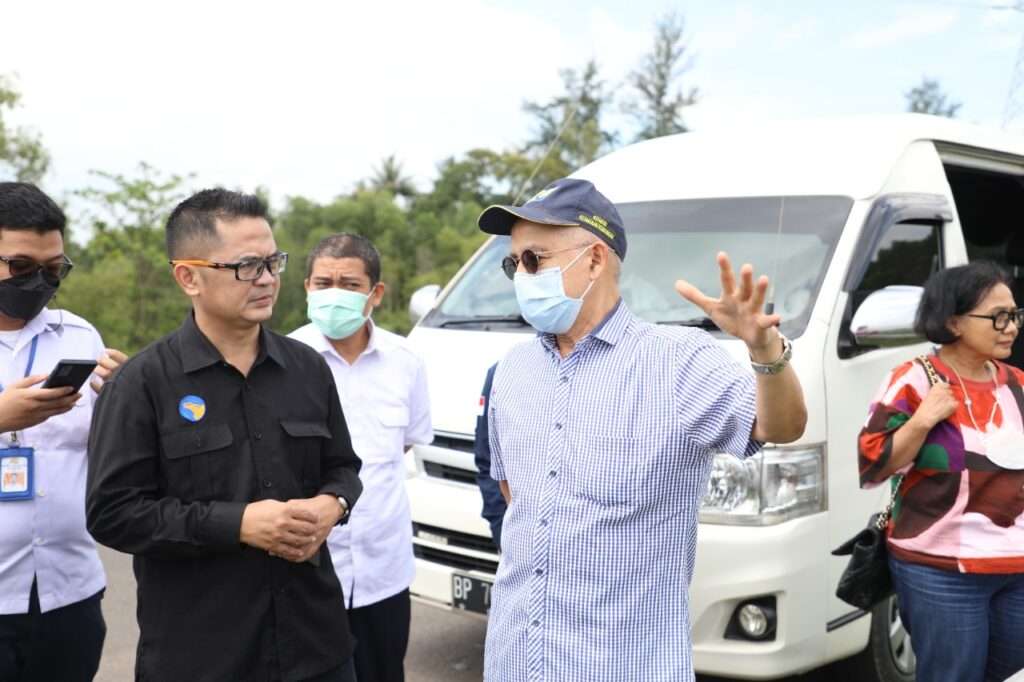
(Head of Center for Development of Free Trade Zone and Special Economic Zones, Irfan Syakir, with Dr. Aries Firman from Ministry of Public Works and Public Housing. Photo Doc.: BP Batam)
On an earlier visit (15/09/2022) to the two dams, Irfan Syakir mentioned that Batam’s Solar Power Plant is an integral part of the Central Government’s comprehensive solar energy transition policy and is part of Indonesia’s 2022 G20 Presidency. Because of that, Syakir added, “… we would soon start intensive meetings in October 2022 with related ministries and institutions as well as other stakeholders.”
Security Commission Team from the Ministry of Public Works and Public Housing, Dr. Aries Firman, pointed out renewable energy as inevitable and cannot be put on hold. However,its urgency must not undermine dams’ safety.
“Clean, renewable energy is an absolute (necessity) whose materialisation cannot wait, but we also cannot afford to have water shortages during drought, or even (simply) having too much water during rain season.”
Dr. Firman added, “Dams and Floating Solar Power Plants must go hand in hand. Especially Duriangkang Dam; as Batam’s backbone source of freshwater, we must really take care of it side by side with developing clean, renewable energy.”